



What an AI agent actually is
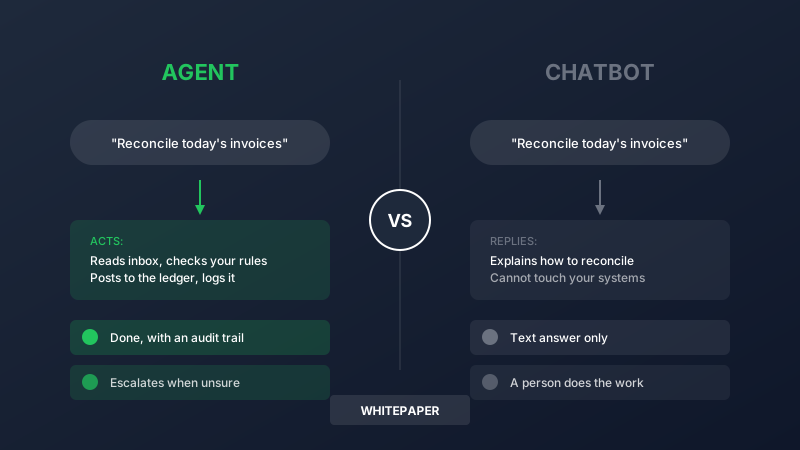
A chatbot answers questions. A workflow script follows a fixed sequence of steps. An AI agent sits between the two: it is given a goal, can call tools such as a calendar, a database or an email system, and decides which step to take next based on what it finds. That ability to choose the next step is what makes it useful on messy, variable work, and it is also what makes it riskier than a script.
For a business reader the useful definition is operational: an agent is software that completes a task on your behalf, inside limits you set, and reports what it did. If it cannot do those three things, it is a chatbot with a longer name.
Where agents pay off
Agents fit tasks that are frequent, rule-bound at the edges and expensive in human attention: answering the same customer questions, triaging inbound requests, scheduling and rescheduling, and routing documents. The common thread is that a person currently does the work by reading something, checking a system and taking a small action.
Our published case studies show this pattern. Khems Cleaning increased bookings by 70% with automated scheduling and cancellation backfill, and CMS Group automated 85% of its document processing workflows with classification and routing. Both are narrow, repetitive jobs rather than open-ended judgement.
Where agents fail
Agents fail when the goal is vague, when the data they read is stale or contradictory, or when a wrong action is costly and cannot be undone. An agent that can issue refunds without a limit, or edit records without a log, is a liability regardless of how good the underlying model is.
The fix is design, not optimism. Give each agent a narrow scope, a list of actions it may take, a spending or impact ceiling, and a clear route to a human when confidence is low.
A safe rollout path
Start with a single task and keep a person approving every action. Review the log weekly, note where the agent was overruled and fix the cause. Once approvals are routine, let the agent act alone on the low-risk cases and keep approval for the rest.
Measure the outcome the business cares about, such as response time, bookings or hours saved, rather than the number of conversations handled. Expand scope only when the measured result holds for several weeks.
What you get:
- Plain-language definition of an AI agent vs chatbot vs automation
- A task-fit test for choosing what to hand to an agent
- Guardrails: approvals, logging, scope limits and fallbacks
- Rollout path from one supervised task to wider autonomy
- Failure modes we see most often and how to design around them