



The front-desk problem
Clinic staff spend a large part of the day answering the same questions about prices, insurance, opening hours and availability, while patients in the building wait. The same pattern repeats on the phone and in messages.
AI suits this routine communication because the questions are repetitive and the answers come from the clinic's own information.
What AI must not do
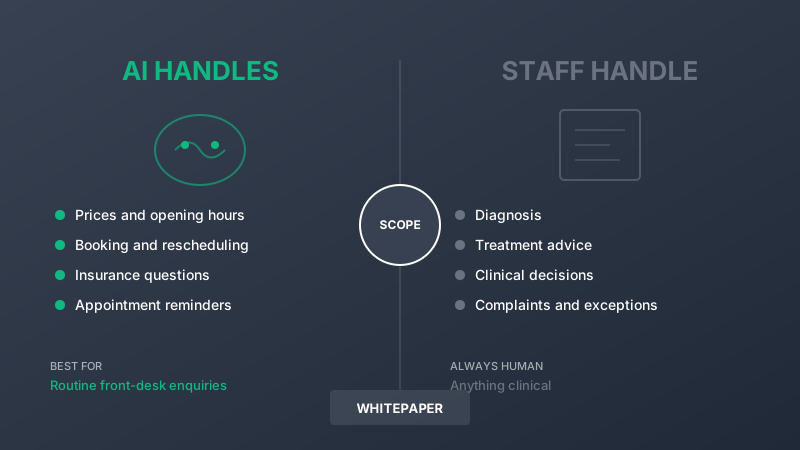
An assistant should not diagnose, recommend treatment or interpret results. Its scope should be administrative: answering from approved information, booking, rescheduling and passing clinical questions to staff with the context attached.
Write the scope down and test it with adversarial questions before launch. Clinical safety comes from what the assistant is not allowed to answer.
Privacy and consent
Patient data is sensitive. Decide what the assistant stores, for how long, and who can read it. Make sure patients know they are speaking with an automated system and that vendors handling the data meet your obligations.
Requirements vary by country and by practice type, so confirm them with your own legal and compliance advice.
A supervised pilot
Begin with one channel and a short list of approved topics, with staff reviewing a sample of conversations each week. Track unresolved questions and handoffs to find gaps in the approved information.
Widen scope only after the review shows consistent, safe answers. Our Dental AI Assistant is being built along these lines, as described in its case study.
What you get:
- Which clinic tasks suit AI and which must stay human
- Scope rules: no diagnosis, no treatment advice
- Privacy and consent checklist for patient data
- Integrating with scheduling and practice systems
- How to run a supervised pilot