



Who is this guide for?
Learn how leading enterprises are replacing traditional keyword search with AI-powered natural language understanding. This guide covers architecture patterns, implementation strategies, and real-world case studies.
This guide is written for engineering leaders and architects evaluating or building AI-native search for their organization — whether you're replacing an aging keyword search system or scoping AI search for the first time.
What's inside
Chapter 1: Architecture Blueprint
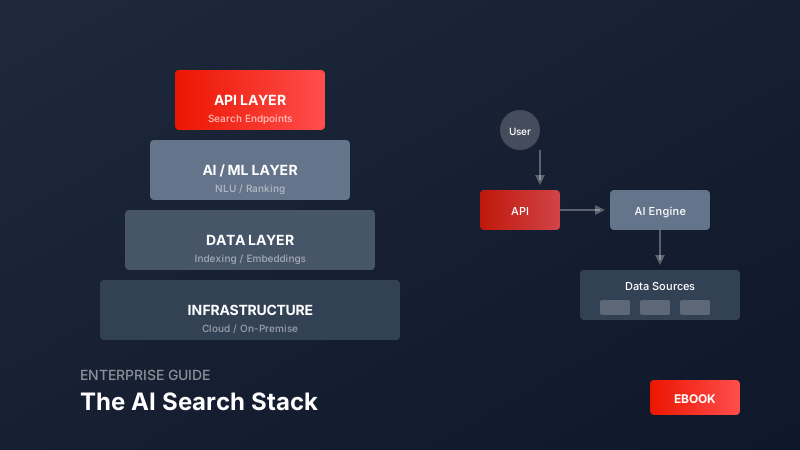
A complete architecture blueprint for AI search systems, from data ingestion to query-time retrieval.
Chapter 2: Implementation Guide
Step-by-step implementation guidance with code examples for connecting real data sources.
Chapter 3: Performance Benchmarks
Performance benchmarks comparing AI-native search against traditional keyword search.
Chapter 4: Enterprise Integration Patterns
Integration patterns for connecting AI search to enterprise data sources at scale.
Chapter 5: Cost & ROI
A cost analysis and ROI framework for building the business case for AI search investment.
Chapter 6: Security & Compliance
Security and compliance considerations for deploying AI search in regulated environments.
Chapter 7: Migrating from Legacy Search
Migration strategies for moving off legacy keyword search systems without disrupting production.
What you get:
- Complete architecture blueprint for AI search systems
- Step-by-step implementation guide with code examples
- Performance benchmarks comparing AI vs keyword search
- Integration patterns for enterprise data sources
- Cost analysis and ROI framework
- Security and compliance considerations
- Migration strategies from legacy search systems
Frequently asked questions
The architecture patterns, integration approaches, and migration strategies covered in this guide apply to AI search generally, not just Zunkiree Search — the framework is meant to help you evaluate the space, regardless of vendor.
Yes — the guide includes a dedicated cost analysis and ROI framework, plus a chapter on migration strategies for moving off legacy keyword search without disrupting production.
Yes — a dedicated chapter walks through security and compliance considerations for deploying AI search in regulated environments.