



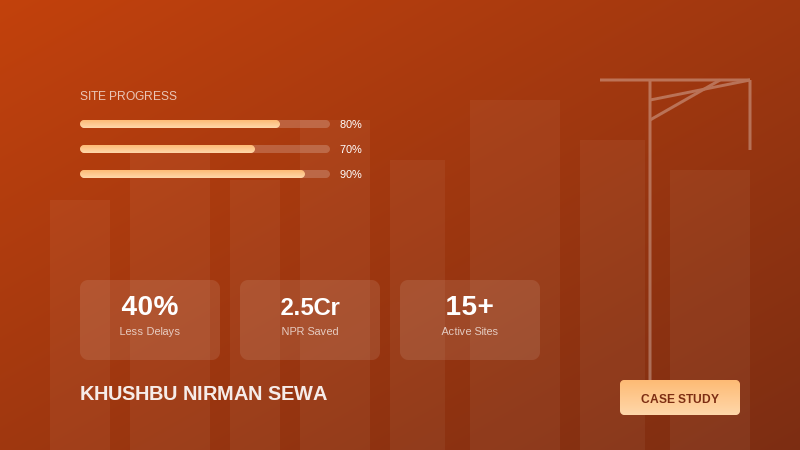
Who is Khushbu Nirman Sewa?
Khushbu Nirman Sewa is a leading construction company based in Kathmandu, Nepal. With over 15 active construction sites across Kathmandu Valley, they manage residential buildings, commercial complexes, and infrastructure projects. Founded in 2015, the company has grown to 200+ employees and is known for delivering quality construction on schedule.
What challenges did Khushbu Nirman Sewa face managing its construction sites?
Managing 15+ construction sites across Kathmandu Valley with paper-based tracking, leading to delayed updates, resource misallocation, and cost overruns.
Key pain points:
- • Site supervisors used paper forms, causing 2-3 day delays in reporting
- • No visibility into resource utilization across sites
- • Material wastage averaged 15% due to poor tracking
- • Project delays were common, averaging 20% over schedule
How did AI-powered tracking solve these problems?
Implemented Zunkiree's AI-powered project management platform with mobile data collection, automated resource optimization, and predictive delay alerts.
Mobile data collection
Site supervisors use a mobile app to log daily progress, issues, and resource usage in real-time.
AI-powered resource optimization
Machine learning algorithms predict resource needs and suggest optimal allocation across sites.
Predictive delay alerts
AI analyzes patterns to predict potential delays 2-3 weeks in advance, allowing proactive intervention.
Centralized dashboard
Management has real-time visibility into all 15+ sites from a single dashboard.
What results did Khushbu Nirman Sewa achieve with AI?
40% reduction in project delays
NPR 2.5 crore saved in first year
Real-time visibility across 15+ active sites
85% reduction in manual reporting time
What are the key takeaways from this case study?
Start with data collection: The foundation of AI is good data. Mobile apps for field workers were the critical first step.
Predictive > reactive: AI's real value is predicting problems before they occur, not just reporting on what happened.
ROI is measurable: NPR 2.5 crore saved in the first year made the business case clear for expansion.
“We went from managing construction sites with phone calls and paper to having real-time visibility across everything. The AI predictions have changed how we plan projects.”
Ram Prasad Shrestha
Managing Director, Khushbu Nirman Sewa
Frequently asked questions
How can AI help manage construction projects?
In this case study, Khushbu Nirman Sewa, a Kathmandu construction company, used an AI-powered tracking system from Zunkiree Labs. Supervisors log progress by mobile app, machine learning suggests resource allocation, and AI predicts potential delays 2-3 weeks in advance, with a central dashboard for management.
What problems does paper-based construction site reporting cause?
The case study describes site supervisors using paper forms, which caused 2-3 day delays in reporting. It also lists no visibility into resource use across sites, material wastage averaging 15% from poor tracking, and project delays averaging 20% over schedule.
What results did Khushbu Nirman Sewa report from AI project tracking?
The case study reports a 40% reduction in project delays, NPR 2.5 crore saved in the first year, real-time visibility across 15+ active sites, and an 85% reduction in manual reporting time. These are the results reported for this client.
How does AI predict construction delays?
According to the case study, AI analyzes patterns in the data collected from sites to predict potential delays 2-3 weeks in advance, allowing proactive intervention. It names good field data collection through a mobile app as the critical first step.