



Where bookings are lost
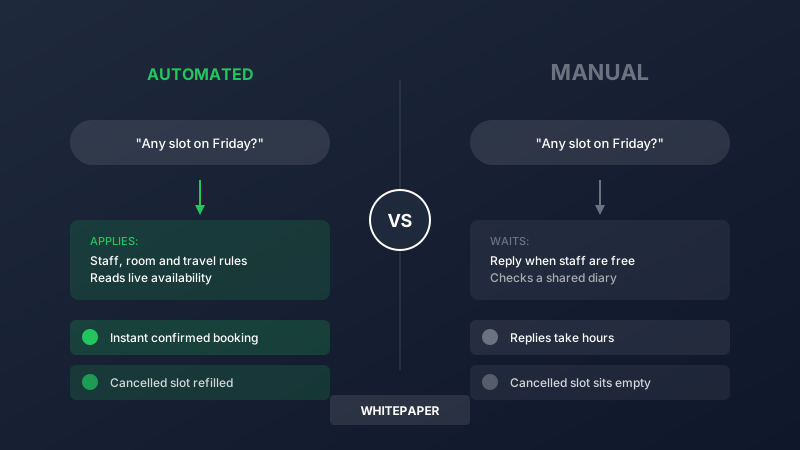
Service businesses lose bookings in three quiet places: enquiries that arrive outside working hours, replies that take longer than the customer will wait, and cancelled slots that nobody refills. None of these show up as a complaint, only as an emptier diary.
Automating the first response and the refill recovers capacity you already pay for.
Modelling real availability
Simple calendar tools assume one person and one slot. Real services have staff skills, equipment, travel time between jobs, buffers and rules such as minimum notice. The scheduling logic must encode these or it will propose bookings the team cannot honour.
This is the problem our Zennly booking engine is built around, and the reason we treat availability rules as data to be configured, not code to be rewritten per client.
Cancellation backfill
When a customer cancels, the system can offer that slot to a waiting list, ranked by fit and priority, and confirm the first acceptance. Done well, a cancellation becomes a short interruption instead of an empty hour.
Khems Cleaning increased bookings by 70% after adopting automated scheduling and cancellation backfill, as described in its case study.
Measuring the result
Track fill rate, time to first response, no-show rate and the share of bookings made without staff involvement. Compare against the same weeks before launch to avoid mistaking seasonality for improvement.
Keep a person in the loop for exceptions such as disputes and unusual requests.
What you get:
- Where bookings are lost: after hours, slow replies, cancellations
- How availability rules are modelled for staff, rooms and travel
- Cancellation backfill: refilling slots automatically
- Metrics: fill rate, response time and no-show rate
- Integration points: calendar, payments and messaging