



Three routes
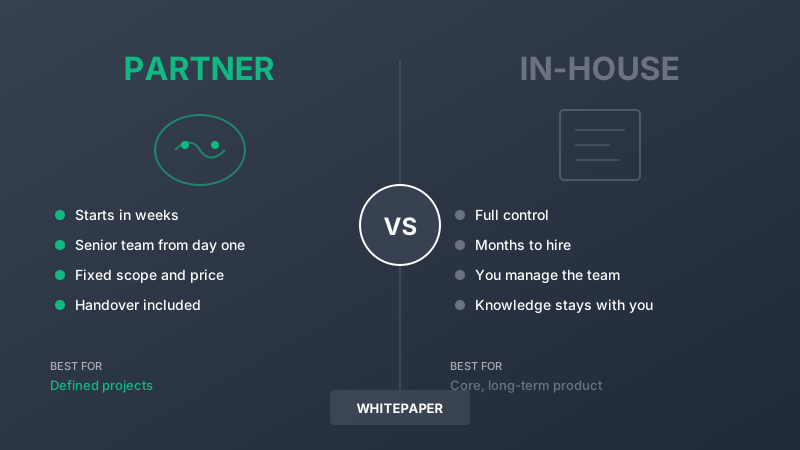
You can buy an existing product, build with your own team, or commission a partner. Buying is fastest when a product already fits. Building gives control but needs hiring and management. A partner can deliver sooner than hiring, at the cost of needing a clear brief and a good handover.
The right choice depends on how central the software is to what makes your business different.
The cost beyond the day rate
Compare the whole cost: discovery, build, hosting, model usage, maintenance and the time your own people spend managing. A cheaper hourly rate can cost more if the brief is vague and the work is redone.
AI products also carry running costs for model calls and monitoring, which should be estimated before approval.
Questions for a partner
Ask for production deployments you can verify, who exactly will work on your project, how scope changes are handled and what you receive at the end. Request references from similar projects and check the company's legal registration.
Our guide to choosing an IT company in Nepal sets out a fuller verification checklist.
Ownership and handover
Agree in writing that you own the code and data, that documentation and deployment instructions are included, and how support continues after launch. These terms matter most when something goes wrong.
A product-first partner that operates software it builds may offer ongoing support, while a project shop may hand over and leave.
What you get:
- Decision matrix: off-the-shelf, in-house or outsourced
- Total-cost view beyond the day rate
- Questions to ask a Nepal-based development partner
- Ownership, handover and documentation requirements
- Engagement models compared: fixed price, dedicated team, product partner